
Crohn's disease and IBD
Practical support for inflammatory bowel disease treatments — from cold storage through the reimbursement paperwork.
The pharmacist's role in IBD follow-up
Crohn's disease and ulcerative colitis move between quiet periods and flares. Treatment aims to reach remission and then hold it, which means taking your medications consistently even when you feel fine. Your pharmacist is the health professional you see most often: they can answer questions between gastroenterology appointments, check for interactions, and keep you from losing track of refills.
The main families of treatment
There is no single treatment for Crohn's disease: the choice depends on where and how severely the disease is active, what has already been tried, and your own circumstances. That decision belongs to your gastroenterologist. Here, for information, are the families most often encountered.
Aminosalicylates (5-ASA), taken orally or rectally, used mainly in ulcerative colitis.
Corticosteroids, used for short periods to bring a flare under control rather than as maintenance therapy.
Immunosuppressants such as azathioprine or methotrexate, which require regular monitoring blood work.
Biologic therapies, given by subcutaneous injection or infusion, which target specific parts of the inflammatory response.
Biosimilars, versions of an already-marketed biologic, authorized by Health Canada under requirements specific to that category.
Non-drug approaches — nutritional follow-up, quitting smoking, psychological support, and sometimes surgery — which are part of the care plan.
Biosimilars in Quebec: what changed
Since April 2022, Quebec's public drug plan reimburses the biosimilar when one exists for the original biologic. Exceptions are provided for, notably during pregnancy, for people under 18, and in certain specific clinical situations. If a switch applies to you it is a supervised process: your gastroenterologist and your pharmacist explain the change. The injection device is not always identical to the one you were using, and we take the time to go through it with you.
The practical side, day to day
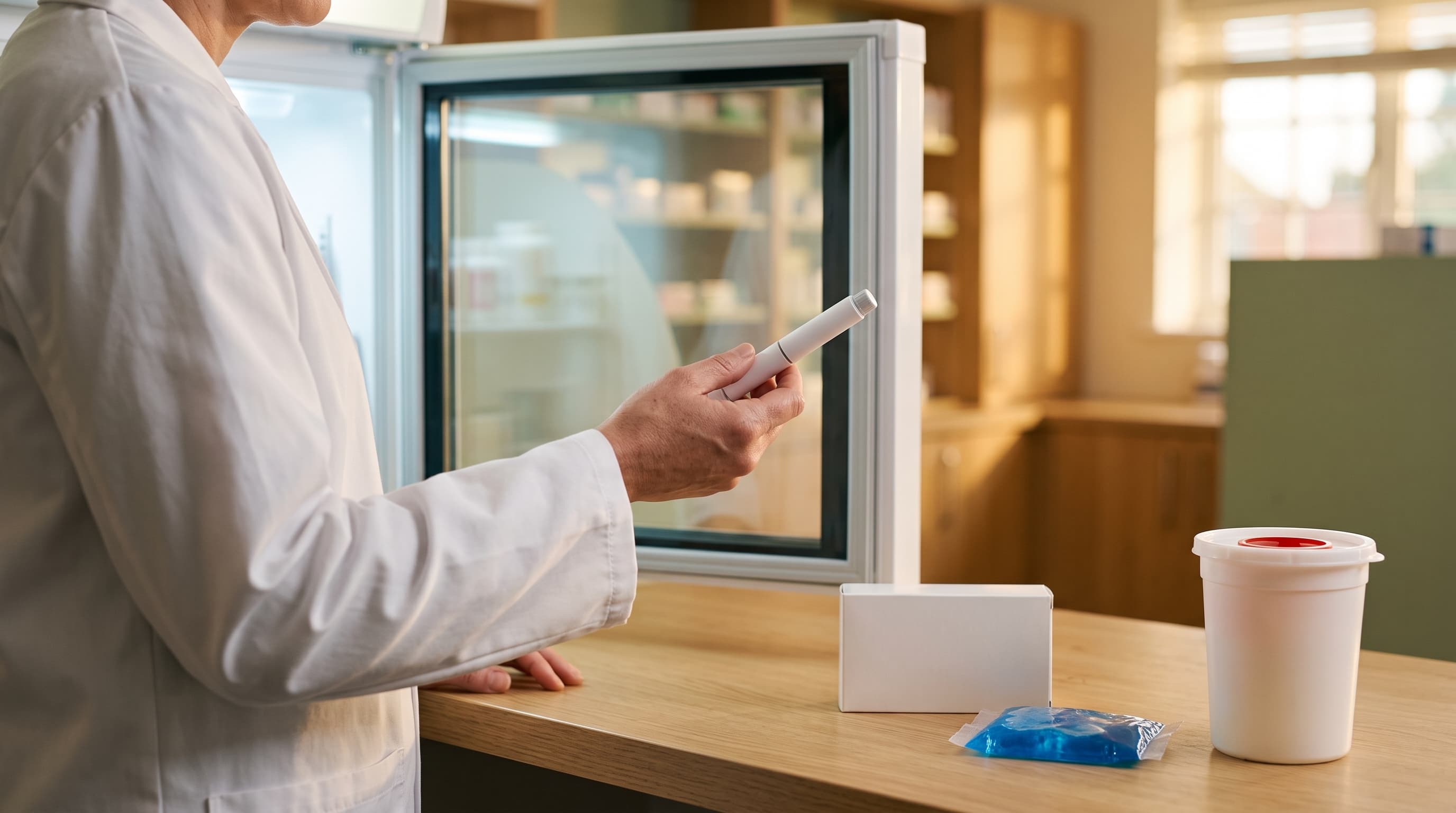
Storage: most biologics are kept refrigerated, never frozen. Take the syringe or pen out ahead of time so it reaches room temperature, following the manufacturer's instructions.
Travel: we provide a letter for carrying your medications and needles, along with advice on keeping them cold.
Used needles: we give you a sharps container and take it back when it is full.
First injection: a pharmacist shows you the technique in private; many support programs also send a nurse.
Infusions: we coordinate with your infusion clinic so the product is in the right place at the right time.
Vaccination: some vaccines are recommended and others should be avoided while on an immunosuppressant. We review your record with you and with your physician.
RAMQ coverage and support programs
Biologics and biosimilars used in gastroenterology are exceptional medications: a payment authorization must be granted before the public plan reimburses, then renewed periodically. We prepare those requests with your clinic and warn you before the expiry date. Every manufacturer also runs a patient support program — reimbursement assistance, training, sometimes home nursing care. We enrol you in the one that matches your treatment.
Frequently asked questions
Where to learn more
Crohn's and Colitis Canada publishes reliable information on Crohn's disease, ulcerative colitis and biologic therapies. Your gastroenterologist remains your first point of reference for anything concerning your treatment plan.
Talk to a pharmacist
Describe your situation in a few words — a pharmacist will call you back confidentially. Please do not include detailed medical information in this form.
Content reviewed by a pharmacist at the pharmacy · Updated July 2026
This page is for information only and does not replace advice from your physician or pharmacist. It is not intended to promote any particular medication. Always speak to your care team before changing a treatment.